mg_xpower wrote:Is it a good idea (worthwile) to upgrade to later shafts ?
Can the (CV?) joint be split so you use the later parts which go into the gearbox with all the rest of older driveshafts ? (I happen to have a later set to stop the oil coming out of a spare box I have here.)
The inner CV (it's actually a tripod) can be split, you have to bend the retaining clip to remove the tripod. I'm not entirely sure how well one tripod would match with another outer casing, especially when worn. I've never tried to swap them, but I would assume it is possible.
AFAIK the only difference later style shafts bring (aside from any changes in ABS rings) is the deeper groove to accommodate the later style seals. The later style seals do tend to be more leak free than the early ones and a lot easier to fit. As to if this is a worthwhile upgrade, depends on how easily you can obtain the parts/change the shafts. If your early seals are causing no problems I would leave them be, to be honest.
1234dist wrote:Consider me down for a full 220 kit once my rebuild gets to that stage.
I'm assuming these kits can take the extra ponnies (300+bhp) over normal kits?
Depends, is the magic word here.
The PG1 was never designed to take this sort of torque (I think the max spec according to powertrain was something like 177ft/lb). If you hammer the box it is possible to break it with just a standard engine. The differential bearings are prone to failure at about 90k (IME) anyway when used with a TORSEN diff, I really believe this is down to a poor design choice by Rover in moving away from the original spec taper bearings.
That said, with the exception of these diff bearings, bearing failure is pretty rare in the PG1 as they are not really a common weak point. It is debatable as to if a steel cage offers more strength. However if you are building a 300bhp engine, it would be madness (in my opinion) to put that through an unknown box without first rebuilding it and changing the bearings - they are the part that wears the most, and at least it then has a fighting chance.
I have personally put 320 ft/lb of torque through a rebuilt and steel caged NASP spec PG1 box (the weakest of the three), and run it as a daily driver for several thousand miles without any problems. But I was considerate in how I treated it (no dropping the clutch and drag style starts).
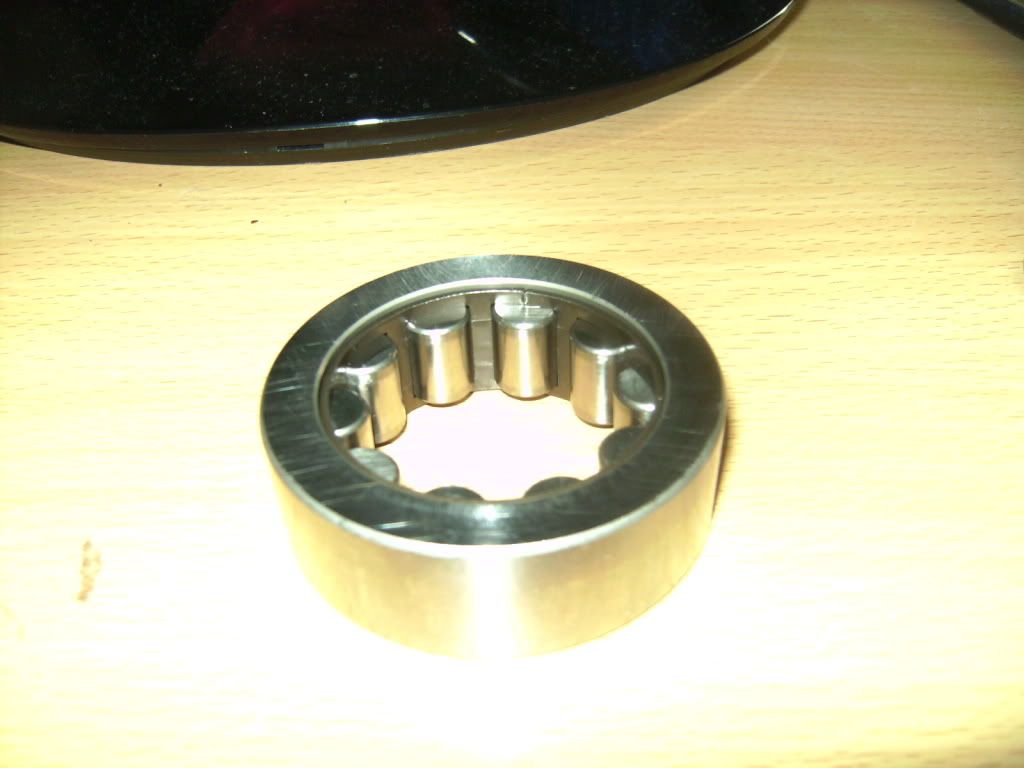
Steel caged bearing kits for the PG1 are actually (surprisingly) cheaper than the OE style polyamide or nylon cage bearings. The steel cages are more robust (although more noisy in operation) - however the cage of the bearing is not normally a highly stressed part of the bearing unless operating outside design parameters. Steel caged bearings are far more tolerant to heat though, while the OE spec plastic cages tend to be quieter in use.
In either case, when installed correctly a set of new bearings is going to offer an advantage over an old worn set, regardless of the cage material used.
Personally, if I was building a "bullet proof" box, I'd use a (preferably new) U spec box with steel caged bearings and consider machining it to fit tapers or similar for the differential. Even then you would not eliminate the chance of failure from a split housing, stripped gear or a knackered syncro.
rovtomcat93 wrote:The gearbox on my 1997 820 Coupe Turbo is whining its nuts off, although it drives ok.
Will this kit of bearings fix the whine

It might seem a daft answer, but only if the bearings are at fault!
If the box is whining due to worn teeth or excessive play then new bearings will not solve this. If the differential bearings are on their way out then replacing these (sooner rather than after you've spat a shaft) would help.
djwilma wrote:just saw this, i bought the bearing from you 18 months ago and i run a U 620 Turbo box but with MGF drift shafts
The seals, std 620 turbo 100100 and 100110 iirc part nos rubber ones, leak
Am i using the right / wrong seals, if the latter what should i be using ?
Also in 2nd and 4th the box whines, has done since it was built (been built twice by Drew and Matt Parker) any ideas ?
The seals are matched to the driveshaft rather than the box. As Dan says, you can use the early type of seals with either shaft, whereas the later type of seal requires the deeper recess in the driveshaft. So you would have to check your shaft to work out if you have the correct type of seal (see above for how to identify).
I'd have to say (much as I don't like to add weight to the myth that rovers leak oil) that the early seals do tend to leak more than the later ones. Presumably Rover had their reasons for changing the design, and it certainly seems the later style of seal have less problems and are a lot easier to fit correctly. That said it is possible to install a set of early seals and have them work just fine.
I once had a chronic leak from one of my driveshafts with early seals fitted - I was quick to blame the seal, but it actually turned out that when I had painted the shaft I got overspray where the rubber seals against the shaft. After cleaning this off and refitting with new early style seals I had no further leaking problems. So I would say it is also well worth checking the shafts before assuming the seal is to blame.
With regards to the whine, it should be noted that steel caged bearings *will* make more noise than the plastic caged types. however it shouldn't be intrusive, if it is something is wrong.
If you have had the box rebuilt twice with new bearings fitted and the whine is still present, it would seem highly likely it is down to a worn gear or possibly incorrect shimming. As stated above, there is little you can do to fix this other than replace the gear/gear pair that is worn.
Even a "rebuilt" gearbox is still going to have done a hundred thousand miles or more, so it will never be perfect. A slight whine is not normally a gearbox killer though, if the bearings are good and it is correctly shimmed, then I wouldn't worry about it too much.


 ......Arrrrrggghhhhh.........